
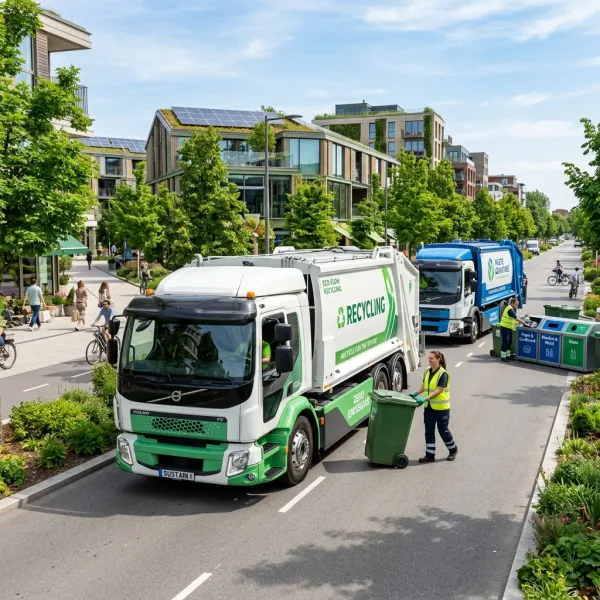
How Waste Management Is Impacted
Waste collection and sanitation fleets run fixed or dynamic routes with high fuel and maintenance costs. Route efficiency, bin fill levels, and vehicle availability directly affect service quality and cost.
Fleet tracking and telematics help optimize routes and monitor vehicle and driver performance. Real-time location supports dispatch and customer queries; fuel and engine data reduce waste and support maintenance. Operators can improve collection efficiency, control costs, and meet service targets more reliably.

Operational
Insights
TrackAlways enables waste collection teams to improve route execution, fuel efficiency, and fleet uptime across urban and peri-urban operations. We implement geofenced collection zones, missed-stop alerts, and maintenance triggers to support faster dispatch decisions.
A focused KPI stack includes completion rate by route, fuel consumption per collection cycle, and repeat downtime incidents by vehicle. These metrics make it easier to optimize schedules, reduce service gaps, and maintain predictable collection quality.
Collection operations often require clear proof of service for each zone. Route history, stop timestamps, and exception logs help supervisors verify completed runs, identify missed segments, and resolve customer queries with objective movement records.
Waste fleets also face variable traffic and route congestion that can affect turnaround times. Using live visibility and exception-based dispatch, operators can reassign units faster, maintain daily coverage targets, and reduce the operational impact of unexpected delays.
Over time, combining route completion data with fuel and maintenance records creates a more reliable planning baseline for staffing, shift timing, and vehicle rotation. This improves service consistency while keeping operating controls practical for day-to-day team management.
Frequently Asked Questions
How do waste fleets prove a Nairobi estate was collected?
Route playback, stop timestamps, and geofenced collection zones on Venus give supervisors proof of service for each zone when a customer queries a missed street.
What KPIs matter for municipal and private waste contractors?
Completion rate by route, fuel per collection cycle, and repeat downtime by vehicle. Missed-stop alerts let dispatch send a spare before the day ends.
Can routing adapt when traffic blocks a collection run?
Yes. Live GPS and exception dispatch let supervisors re-sequence remaining stops so daily coverage targets still hold in congested estates.