
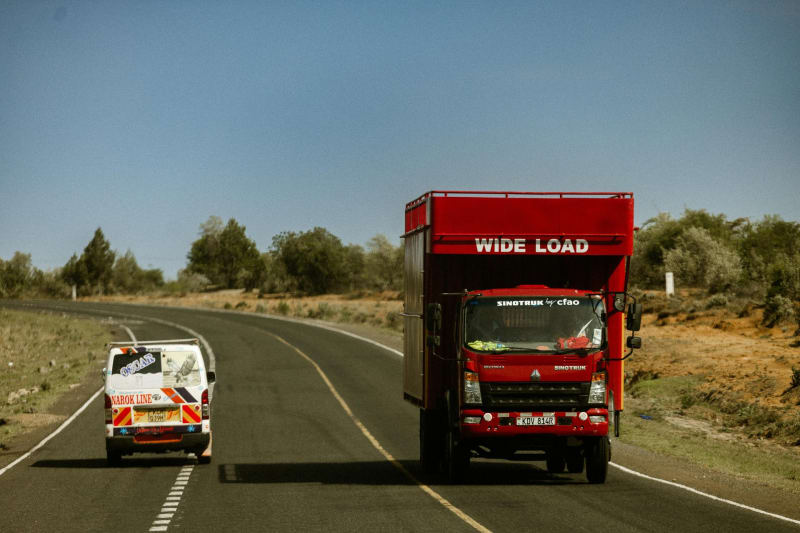
You run a profitable business on paper. The invoices go out. The contracts are signed. Revenue is coming in. But every month you find yourself at the end of the cycle chasing a number that should be there and is not. Fuel costs are up again. Maintenance bills arrived without warning. The margin you planned for has quietly shrunk. This is one of the most frustrating positions a fleet operator in Kenya can be in: working hard, running vehicles, moving cargo or people, and still losing ground.
This is not a technology pitch. It is a practical look at the most common ways Kenyan fleet businesses bleed money through problems that are completely invisible without the right data. Most of these losses are predictable. They are preventable. And in most cases, they have been quietly compounding for years, growing slowly enough that they feel like the normal cost of doing business. They are not. Each one has a cause, and each cause has a fix. Here is where to start looking.
Fuel You Cannot Account For
Fuel is the single largest operating cost for most commercial fleets in Kenya, and it is also the line item most likely to be quietly wrong. The gap between the fuel your business purchases and the fuel that should have been consumed by your vehicles typically runs between 15 and 30 percent in Kenyan fleets. That is not a rounding error. On a fleet spending KES 500,000 per month on fuel, that gap represents KES 75,000 to KES 150,000 disappearing every single month with no clear explanation.
There are three main sources of that gap, and they behave very differently. The first is driver siphoning: fuel that enters the tank and is later removed and sold, either on the road or at depots with lax oversight. The second is shortfilling at fuel stations, where the attendant charges for 40 litres and dispenses 34. This is more common at independent stations and on long-haul routes where drivers have established informal relationships with attendants. The third source is genuine overconsumption caused by harsh driving, speeding, overloading, or poorly maintained engines running inefficiently.
The problem is not just that you are losing fuel. The problem is that without accurate, vehicle-level data, you cannot tell which of these three issues you have. You just know the number does not add up. You might discipline a driver for siphoning when the real problem is a fuel station shortfilling consistently. Or you might blame a station when the real issue is a vehicle with a failing injector consuming 20 percent more than it should. The gap is real. The cause stays hidden until you have the data to isolate it.
Vehicles Working When They Should Not Be
Drivers know when they are being monitored. More importantly, they know when they are not. Unauthorized vehicle use is one of the most widespread and under-reported problems in East African fleet operations, and it takes several forms. Weekend personal trips where the vehicle logs significant mileage that no business activity explains. Unscheduled detours during working hours, where a delivery route that should take 90 minutes takes three hours. Field teams stationary at locations that are not job sites, burning fuel while idling, accumulating mileage for trips that were never part of any work order.
Consider a realistic example. A vehicle shows 300 km on the trip log at the end of the week. The authorized routes it covered total 220 km. That 80 km problem is real mileage, real fuel, real wear on tyres and brakes, and potentially real liability if that vehicle was involved in an incident during an unauthorized trip. Now multiply that across a 30-vehicle fleet. If even half of your fleet has an average 80 km per week of unauthorized use, you are absorbing 1,200 km per week in costs you never approved. Over a year, that is a significant portion of your operating budget funding trips you never sanctioned and activity you cannot see.
The commercial and legal exposure compounds the financial one. If a driver uses your vehicle without authorization and causes an accident, your insurance policy may not respond fully, depending on the terms of your commercial cover. The business pays twice: once for the unauthorized use and again when the insurer disputes liability.
Maintenance That Always Comes as a Surprise
In reactive fleet environments, maintenance feels like a series of ambushes. The tyre blows on the Nakuru highway. The brake pads fail on a vehicle you needed this week. The engine overheats on the Mombasa road and you are now paying for a tow, a hotel for the driver, a delayed delivery penalty from the client, and an emergency repair at a roadside garage charging premium rates because they know you have no choice. A tyre run to complete failure costs two to three times more than one identified and replaced at the right mileage. An engine fault caught early in a workshop costs a fraction of the same fault diagnosed after a breakdown 400 km from Nairobi.
The root cause of most premature mechanical wear in Kenyan commercial fleets is driver behavior, specifically harsh driving. Aggressive acceleration, hard braking, and high-speed operation destroy tyres and brakes significantly faster than average, stress transmissions and engines, and push service intervals closer together. The insidious part is that this behavior is completely invisible to fleet managers operating without behavior data. You see the bill. You do not see the 11,000 harsh braking events that caused it. Without that visibility, you cannot address the behavior, and the bills keep coming on the same schedule they always have.
Insurance Costs That Never Come Down
Commercial vehicle insurance in Kenya is widely treated as a fixed cost. You renew it, you pay it, and you move on. That thinking is costing fleet operators real money. Underwriters in Kenya's commercial vehicle market are increasingly willing to reduce premiums by 8 to 15 percent for operators who can demonstrate low incident rates, controlled driver behavior, and active monitoring of their fleet. The leverage exists. Most operators simply never try to use it because they have no data to bring to the negotiation.
Run the numbers on your own fleet. If your business is paying KES 4 million annually in commercial vehicle insurance premiums, an 8 to 15 percent reduction represents KES 320,000 to KES 600,000 available every single year, not from driving less or cutting vehicles, but simply from having and sharing the right operational data with your insurer. That money does not require a single new contract or additional revenue. It is sitting in your insurance renewal, waiting for someone to ask the right question backed by the right evidence.
What Fleet Operators Who Have Fixed These Problems Did
The common thread connecting every cost driver above is visibility. Every one of these problems exists precisely because something is happening that management cannot see. Fuel is disappearing from somewhere in the chain, but no one can pinpoint where. Vehicles are moving outside authorized routes, but no one knows until something goes wrong. Brakes are being destroyed by a driver who brakes hard at every junction, but the fleet manager only finds out when the repair invoice arrives. The operators who have made the biggest gains in reducing fleet costs across Kenya and East Africa did not start with complex technology implementations. They started by getting basic visibility: where are my vehicles, who is driving them, how much fuel are they actually using, and how are they being driven. Once they could see the data, they acted on it. That is where the savings came from, not the tracking itself, but the decisions the data made possible.
GPS tracking and fleet management platforms are the tool that makes this visibility possible. The technology is well established, the hardware is reliable, and the platforms purpose-built for East African conditions now give operators real-time fuel data, driver behavior scores, route adherence reports, and maintenance alerts from a single dashboard. Fleet management done properly is not about surveillance. It is about giving business owners the same quality of information about their vehicles that they already have about their finances. Trackalways Africa works with fleet operators across Kenya and the broader East African market to build that visibility, starting with an honest audit of where losses are actually occurring and building from there. The savings are real. The operators who have made this move will tell you the question they regret most is why they waited.
If you want to go deeper on any of these cost drivers, the fuel monitoring solutions and video telematics pages on the Trackalways Africa website break down exactly how each technology addresses each problem. The starting point, though, is simply deciding you want to know the truth about what is happening in your fleet.
Frequently Asked Questions
How much can a Kenyan fleet realistically save with GPS tracking?
The realistic range for most Kenyan fleet operators falls between 15 and 25 percent of total operating costs in the first year. Fuel savings alone typically account for 10 to 20 percent once driver behavior improves and fuel monitoring closes the accountability gap. Insurance reductions, reduced maintenance spend, and recovered productivity from eliminating unauthorized use add further. The exact figure depends on the size of your fleet, the severity of your current losses, and how aggressively you act on the data.
Where do I start if I want to understand where my fleet is losing money in Kenya?
Start with fuel. Pull three months of fuel purchase records and compare them against your vehicles' manufacturer-rated consumption at the mileage those vehicles actually covered. The gap between what you should have used and what you bought is your first number. Then look at your maintenance spend for the same period and identify any costs that arrived without a service schedule predicting them. These two exercises will tell you quickly whether fuel or maintenance is your bigger problem, and that tells you where to focus first.
Does fleet tracking work for small fleets with only 3 to 5 vehicles in Kenya?
Yes, and the proportional impact is often greater on smaller fleets because every vehicle matters more. A single unauthorized trip or a single fuel siphoning incident on a 4-vehicle fleet represents 25 percent of your assets being misused. The technology scales to any fleet size, and the cost per vehicle at small fleet scale is still comfortably offset by the savings most operators find in the first 90 days.
How do I stop unauthorized use of my company vehicles in Kenya?
The most effective deterrent is the combination of awareness and consequence. When drivers know that route data, ignition times, and location history are being recorded and reviewed, unauthorized use drops dramatically, often by 80 to 90 percent within the first month of implementation. Pair that awareness with a clear, written policy on vehicle use and consistent enforcement, and the problem largely solves itself. The key is that drivers must genuinely believe the monitoring is active and that the data is being reviewed.
What is the biggest cause of high fuel costs in Kenyan fleets?
Based on operational data across East African fleets, the single biggest cause is the combination of driver behavior and lack of accountability at the point of fueling. Harsh driving increases fuel consumption by 15 to 25 percent above the manufacturer baseline. When you add shortfilling at stations and the absence of any mechanism to detect or prove it, most fleets are carrying both problems simultaneously without knowing the split. Solving the accountability problem at the pump and the behavior problem behind the wheel together typically produces the largest single improvement in fuel efficiency.
Ready to Find Out Exactly Where Your Fleet Is Losing Money?
Trackalways Africa offers a free fleet audit for operators in Kenya and East Africa. No obligation. No sales pressure. Just an honest look at your current operations and a clear picture of where the losses are likely coming from. Call us on +254 116 257285 or visit trackalwaysafrica.com to book your audit today. The data you do not have right now is costing you money every single day.