
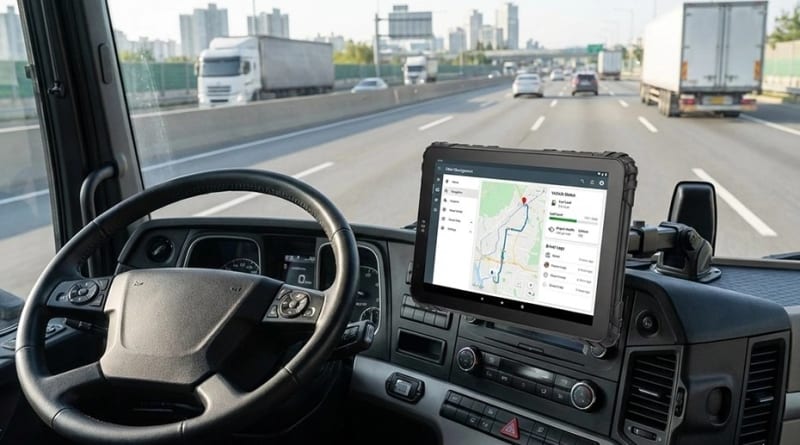
You Cannot Manage What You Cannot See
It starts with a single missed call. A client on Mombasa Road wants to know where their consignment is. Your driver is not picking up. Your dispatcher is guessing. And the tracking app on your screen shows a vehicle that stopped updating forty minutes ago. Sound familiar?
Fleet visibility is one of the most persistent pain points for logistics companies, matatu operators, and delivery businesses across Kenya and East Africa. Roads stretch from Nairobi to Kisumu, from Mombasa to Kampala. Vehicles move through patchy network coverage, rough terrain, and high-risk corridors. Without reliable, real-time data, every gap in coverage is a gap in accountability.
That is where 4G GPS tracking changes everything. Not just as an upgrade, but as a fundamental shift in how you manage your fleet.
What Exactly Is a 4G GPS Tracker?
A GPS tracker is a hardware device installed in a vehicle that uses satellite signals to determine location. It then transmits that location data, along with other vehicle information, back to a central software platform. Fleet managers can monitor all of this in real time from a computer or smartphone.
The "4G" refers to the cellular network the device uses to send that data. Just as your phone performs faster and more reliably on 4G LTE than on older 2G or 3G networks, a 4G GPS tracker communicates with your fleet management platform faster, more consistently, and with far greater data capacity.
The Teltonika FMB125 is a prime example of what a modern 4G GPS tracker looks like in practice. It combines 4G LTE connectivity with GNSS tracking, Bluetooth 4.0 support, digital and analogue inputs, OBD data reading capability, and an internal backup battery. It is purpose-built for demanding commercial environments, exactly like the ones found across Kenya and the wider East African region.
4G vs 2G Trackers: Why the Difference Matters in Kenya
Many fleets across East Africa are still running on 2G GPS trackers. When these devices were installed, 2G was the dominant network standard. That world no longer exists.
Safaricom and other major network operators in Kenya have been progressively phasing out 2G infrastructure in favour of 4G LTE and 5G expansion. A 2G tracker in a Nairobi delivery van today is operating on borrowed time. Network blind spots are growing. Update intervals are slower. And when the 2G grid in a specific corridor goes down, your tracker goes silent.
4G LTE trackers like the FMB125 connect to the current network standard. That means faster data transmission, more frequent location updates, and stable connectivity even in high-density urban areas like the Nairobi CBD or busy logistics hubs along Mombasa Road. The data pipeline is simply wider and more reliable.
Beyond speed and coverage, 4G trackers support richer data. Where a 2G device might send basic GPS coordinates, a 4G device like the FMB125 can simultaneously transmit location, engine diagnostics via OBD, driver behaviour scores, Bluetooth sensor readings, and input signals from attached peripherals. All of this happens in real time, without the data bottlenecks that older network standards impose.
4 Key Benefits for Kenyan Fleet Operators
1. Real-Time Location Accuracy Across All Routes
Whether your trucks are running the Nairobi to Mombasa corridor, navigating Thika Road during morning traffic, or making last-mile deliveries in Westlands, 4G connectivity keeps your data flowing. The FMB125 uses GNSS, which draws from multiple satellite systems including GPS and GLONASS, to deliver precise positioning even in challenging environments. You get location updates that reflect where your vehicle actually is, not where it was three minutes ago.
2. Driver Behaviour Monitoring and Harsh Driving Detection
Accidents are one of the highest costs in fleet operations. Hard braking, sharp cornering, rapid acceleration, and speeding all raise your risk profile and your fuel bill. The FMB125 includes built-in harsh driving detection that flags these events automatically. Fleet managers can review driver behaviour reports, identify repeat offenders, and take corrective action before a costly incident occurs. On high-risk stretches like the notorious Salgaa blackspot on the Nakuru highway, this data can be life-saving.
3. OBD Integration for Engine and Vehicle Health
The FMB125 reads OBD data directly from compatible vehicles. This means you get engine fault codes, mileage data, fuel consumption readings, and other diagnostic information transmitted straight to your fleet platform. Instead of waiting for a driver to report a warning light or finding out about a breakdown after it happens, you can monitor vehicle health proactively. For logistics companies managing large fleets of trucks and delivery vans, this predictive maintenance capability translates directly into reduced downtime and lower repair costs.
4. Backup Battery and Sleep Modes for Continuous Coverage
The FMB125 includes an internal backup battery that keeps the device operational even if the main vehicle power supply is cut or tampered with. This is a critical anti-theft feature. If a vehicle is hijacked and the wiring is tampered with, the tracker keeps transmitting. Sleep modes also allow the device to conserve power during periods of inactivity, extending battery life without sacrificing coverage when it matters most.
Who Needs a 4G GPS Tracker in East Africa?
The honest answer is: any business that moves people or goods. But some sectors feel the pain of inadequate tracking more acutely than others.
Logistics and freight companies operating cross-border routes between Kenya, Uganda, Tanzania, and Rwanda need uninterrupted tracking across multiple network environments. A 4G tracker with robust GNSS capability handles those transitions far better than older devices.
Matatu operators and public service vehicle fleets in Nairobi and other urban centres face regulatory compliance requirements and passenger safety obligations. Real-time tracking with speed monitoring and harsh driving detection helps operators stay compliant and protect their passengers.
Delivery businesses handling e-commerce and FMCG distribution across Nairobi, Mombasa, and Kisumu need precise last-mile visibility. When a customer calls to ask where their package is, your team needs an answer in seconds, not minutes.
Construction and heavy equipment companies need to monitor assets that move between sites across rough terrain. The FMB125's durable design and versatile input support make it a strong fit for these environments as well.
School bus operators managing student safety benefit enormously from accurate real-time tracking. Learn more about how dedicated solutions support that use case through our School Bus Management platform.
How It Integrates with Venus Fleet Software
A GPS tracker is only as powerful as the platform it feeds. Hardware without smart software is just a blinking dot on a map.
The FMB125 integrates seamlessly with the Venus platform, Trackalways Africa's fleet management software. Venus aggregates all the data your trackers collect and turns it into actionable intelligence. You get live maps, trip history, geofence alerts, driver scorecards, maintenance schedules, and customisable reports, all from a single dashboard.
The combination of 4G data transmission speed and Venus's real-time processing means you are working with current information at all times. Set a geofence around a restricted zone and get an instant alert if a vehicle crosses it. Schedule a maintenance reminder based on actual mileage data pulled from the OBD port. Review a week of driver behaviour reports before your Monday morning briefing.
This is what modern fleet management looks like. Explore the full capabilities of the Venus Platform and see how it transforms raw tracker data into fleet-wide performance.
For a deeper dive into how fleet software is reshaping logistics in East Africa, browse the latest insights on our Trackalways Africa Blog.
Getting Started Is Simpler Than You Think
Many fleet managers assume that upgrading their tracking hardware requires a full system overhaul. It does not. The FMB125 is designed for straightforward installation in trucks, vans, matatus, and other commercial vehicles. Trackalways Africa handles installation, configuration, and onboarding so your team is up and running fast.
Whether you are managing five vehicles or five hundred, the process starts with a consultation. Our team assesses your fleet profile, route patterns, and operational requirements to recommend the right hardware and software configuration. You can explore our full range of Advanced Trackers to see what fits your operation best.
Frequently Asked Questions
What is the difference between a 4G GPS tracker and a regular GPS tracker?
A regular GPS tracker uses satellite signals to determine location, just like a 4G GPS tracker. The difference is in how that data is transmitted. A 4G GPS tracker uses 4G LTE cellular networks to send data to the fleet platform, which means faster updates, higher data capacity, and more stable connectivity compared to older 2G or 3G devices. In Kenya, where 4G infrastructure is now the dominant network standard, a 4G tracker delivers significantly better performance.
Will a 4G GPS tracker work in rural parts of Kenya and East Africa?
4G coverage continues to expand across Kenya and the broader East African region. The FMB125's GNSS tracking ensures that location data is still captured even in areas with intermittent network connectivity. The device stores data locally and transmits it as soon as a network connection is re-established. This makes it suitable for long-haul routes that pass through areas with varying signal strength.
Can I monitor driver behaviour with the FMB125?
Yes. The FMB125 includes built-in harsh driving detection that automatically records events such as hard braking, rapid acceleration, and sharp cornering. When paired with the Venus fleet platform, this data is compiled into driver behaviour reports and scores, giving fleet managers clear, objective information to support driver coaching and safety programmes.
How do I get pricing for the FMB125 or other 4G GPS trackers in Kenya?
Trackalways Africa provides customised pricing based on your fleet size, required features, and software needs. The best way to get an accurate quote is to visit our contact page or call our team directly on +254 116 257285. Our specialists will assess your requirements and recommend the most cost-effective solution for your operation.
The Bottom Line
Fleet visibility is not a luxury. It is a competitive necessity. In a market as dynamic and demanding as Kenya and East Africa, the operators who invest in reliable, data-rich tracking infrastructure are the ones who reduce costs, protect assets, and build client trust.
The shift from 2G to 4G tracking is not just a technical upgrade. It is a business upgrade. Faster data. Richer insights. More control.
Ready to make the move? Visit trackalwaysafrica.com or call +254 116 257285 to speak with a fleet tracking specialist today.