
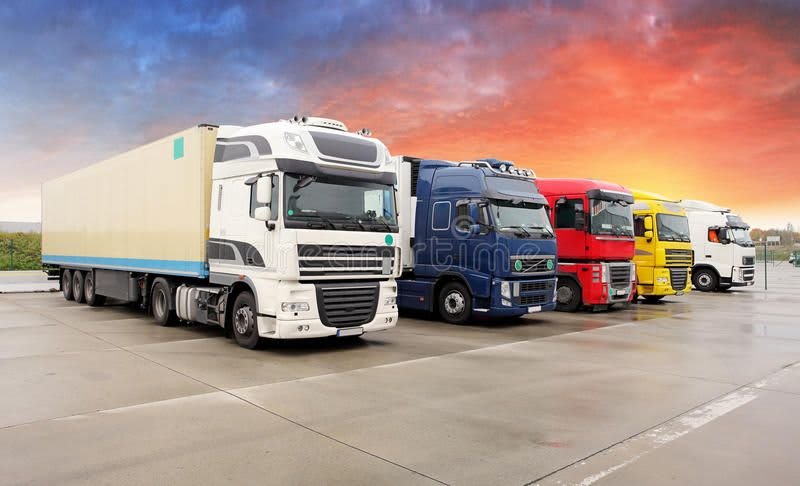
The problem may not be the delivery itself. It may be fuel consumed along the way, unauthorised stops, inefficient driving or a route deviation that nobody noticed until the vehicle returned.
For FMCG distributors operating long-distance routes across Nigeria, basic GPS tracking is no longer enough.
The Teltonika FMB125 gives fleet managers the ability to combine vehicle location with additional operational information such as fuel data, driver identification and temperature monitoring.
The Challenge of Managing FMCG Fleets Across Nigeria
Nigeria's road network carries a major share of domestic freight movement, making road transport essential for distributors moving food, beverages, household products and other fast-moving consumer goods.
The Federal Road Safety Corps' Road Transport Safety Standardization Scheme is designed to promote safer and more professional fleet operations, including fleet registration, driver training, inspection and safety policies.
For fleet managers, however, compliance is only one part of the challenge.
A distribution company may have vehicles leaving Lagos for Abuja, Kaduna, Kano or other northern markets while the operations team remains hundreds of kilometres away.
Without reliable telematics, managers are often dependent on driver calls and manually submitted reports.
That creates an accountability gap.
Why the FMB125 Is More Than a GPS Tracker
The Teltonika FMB125 is a professional wired tracker designed for demanding fleet deployments.
It supports GPS, GLONASS, Galileo, BeiDou and QZSS positioning and includes dual-SIM connectivity.
More importantly, the device has several interfaces that allow it to connect to additional fleet equipment.
These include:
RS232
RS485
1-Wire
Bluetooth
Digital and analogue inputs
External GNSS antenna support
This means the FMB125 can become part of a wider fleet-monitoring system rather than operating as a simple location tracker.
Controlling Fuel Loss on Long-Haul Routes
Fuel is one of the largest operating expenses for a long-haul fleet.
When a truck's fuel level changes unexpectedly, a fleet manager needs to know whether the change was caused by legitimate consumption or something else.
The FMB125 supports connection to compatible fuel sensors through its RS232 and RS485 interfaces.
This allows fuel information to be analysed alongside vehicle movement.
For example, a fleet manager may identify:
Unexpected fuel drops while a vehicle is stationary
Excessive fuel consumption
Long periods of idling
Fuel usage that does not correspond with distance travelled
Differences between expected and actual consumption
The result is a clearer picture of where fuel costs are coming from.
Driver Identification for Better Accountability
The same vehicle may be operated by several drivers.
If a speeding event or unauthorised route deviation occurs, identifying the responsible driver can become difficult when there is no reliable driver-assignment record.
The FMB125 supports driver identification through compatible iButton or Bluetooth devices.
This allows fleet operators to connect a particular journey or driving event with the driver assigned to the vehicle.
That information can support:
Driver performance management
Safety training
Investigation of incidents
Driver scoring
Unauthorised vehicle-use detection
The objective is not simply to punish drivers. Reliable data allows fleet managers to manage performance using evidence rather than assumptions.
Temperature Monitoring for FMCG Transport
Some FMCG products are sensitive to temperature.
A vehicle can reach its destination on time and still have a cargo-quality problem if the required temperature range was not maintained.
The FMB125 supports 1-Wire temperature probes, allowing compatible sensors to be connected to the tracking system.
This gives operators the opportunity to associate temperature information with the vehicle's journey.
If a temperature excursion occurs, managers can investigate where and when it happened instead of relying entirely on handwritten records.
Route Deviations and Unauthorised Stops
Long-distance FMCG routes involve multiple scheduled destinations.
An unexpected diversion may result in:
Additional fuel consumption
Delivery delays
Driver overtime
Increased vehicle wear
Exposure to unnecessary security risks
Geofencing and route-based alerts can help fleet managers identify when vehicles move outside approved operating areas.
Instead of discovering a problem at the end of the journey, the control team can receive an alert while the vehicle is still in transit.
Why This Matters on the Lagos. Kano Corridor
The Lagos: Kano route connects major commercial centres and supports the movement of consumer goods between southern and northern markets.
For an FMCG company, every delivery represents inventory, fuel, driver time and customer commitments.
A small inefficiency repeated across dozens of vehicles can quickly become a major operating cost.
The FMB125 helps fleet managers bring these different data points together.
Location tells you where the truck is.
Fuel data helps explain operating costs.
Driver identification provides accountability.
Temperature monitoring helps protect sensitive cargo.
Together, these create a much clearer picture of the journey.
Final Thoughts
FMCG logistics in Nigeria is too complex to manage entirely through phone calls and manual reports.
Fleet operators need reliable information about vehicles, drivers, fuel and cargo while goods are moving.
The Teltonika FMB125 provides the hardware foundation for that visibility, with multiple interfaces designed for sensor-rich fleet deployments.
For Nigerian FMCG distributors looking to reduce fuel losses, improve driver accountability and gain better control over long-distance deliveries, the FMB125 offers considerably more than a basic GPS location dot.
TrackAlways Africa can supply and integrate the Teltonika FMB125 with the Venus fleet management platform for professional fleet monitoring.