
Modern fleet management demands more than a blinking dot on a map. The Teltonika FMB125 and FMC125 are professional-grade hardwired GPS trackers designed for fleet operators who need deep visibility into both vehicle location and vehicle health. These are serious telematics devices built for corporate and courier fleets across Kenya, Uganda and Tanzania.
Unlike consumer plug-and-play gadgets, the FMB125 and FMC125 are permanently installed by a qualified auto-electrician directly into the vehicle's wiring system. One of their standout capabilities is reading engine diagnostic data from the vehicle's OBDII port in real time. Combined with crash detection, driver behavior monitoring and remote OTA configuration, these trackers deliver a genuinely complete telematics solution for professional fleet operations in East Africa.
What Makes the FMB125 and FMC125 Advanced Fleet Trackers
These devices go well beyond basic GPS. Here is what sets them apart from standard vehicle trackers:
- Hardwired installation by a qualified technician for a permanent, reliable and tamper-resistant connection to the vehicle's power system.
- Integrated OBDII and EOBDII data reader capturing real-time engine data including DTC fault codes, fuel consumption, RPM, engine temperature and battery voltage as one of several powerful data inputs alongside GPS.
- Built-in crash detection that automatically triggers emergency GPS alerts on impact, giving your team an immediate response window.
- Remote configuration and OTA firmware upgrades via FOTA requiring zero physical access to the device after installation.
- Integrated backup battery ensuring continued tracking even when vehicle power is cut or tampered with.
- FMB125 operates on 2G for wide coverage across rural East Africa. The FMC125 operates on 4G LTE for faster, higher-bandwidth data transmission in urban and connected corridors.
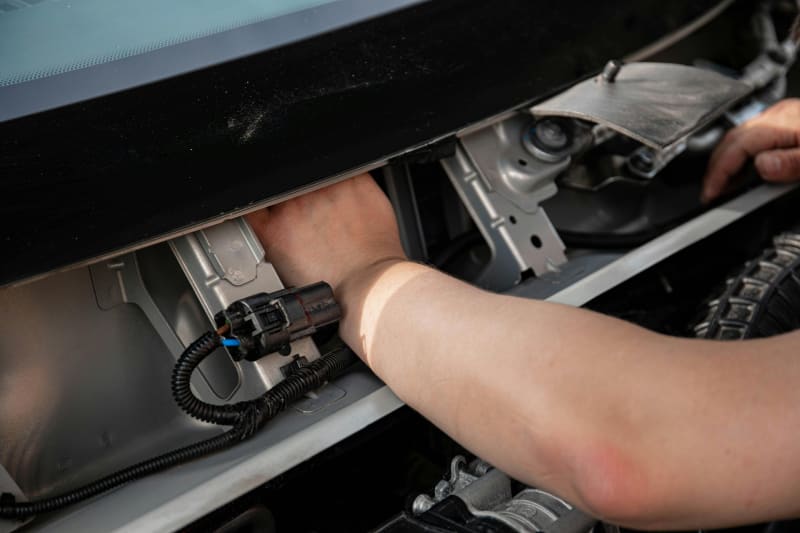
It is important to understand what hardwired installation actually means in practice. A plug-and-play OBD tracker sits loosely in the OBD port under the dashboard. Any driver, passenger or opportunistic thief can pull it out in seconds. The FMB125 and FMC125 are wired directly into the vehicle's electrical system by a trained auto-electrician. The device is concealed, secured and integrated. Removing it requires deliberate effort and leaves evidence of tampering.
For professional fleet operations in Kenya, this distinction matters enormously. A leased vehicle, a courier motorbike, a corporate SUV - these assets need reliable, permanent tracking. Hardwired installation is not just about security. It means consistent power, consistent connectivity and consistent data quality. That is the foundation of credible fleet telematics at scale.
OBDII Data as Part of a Complete Telematics Picture
The OBDII engine data capability on the FMB125 and FMC125 is not a standalone gimmick. It works as one layer within a complete telematics picture that includes GPS location, speed profiling, driver behavior scoring and crash detection. When all of these data streams are combined on a single platform, fleet managers gain visibility that no single sensor type could deliver alone. Engine health and driver performance are no longer separate reports managed in separate systems. They live side by side in one dashboard.
Consider a realistic scenario. A courier company manager in Nairobi is overseeing a fleet of twelve delivery vehicles operating routes across the city and into peri-urban areas like Thika and Rongai. At any given moment on the Venus Platform, that manager can see exactly where each vehicle is, the current speed and route deviation status, whether the driver has braked harshly in the last hour, what the engine coolant temperature is reading and whether any active DTC fault codes have been flagged. That is a genuinely complete operational picture, not just a location feed.
The practical value of this integration is significant. Harsh braking events combined with elevated engine temperature on a specific vehicle might indicate both a driver behavior issue and an overheating problem that needs workshop attention. Without the OBDII data layer, the fleet manager sees the driving event but misses the mechanical context. With the FMB125 or FMC125 feeding both data streams simultaneously, the manager can prioritize that vehicle for maintenance before a breakdown occurs. Proactive decisions replace reactive firefighting. That is the difference between fleet management and true fleet telematics.
Crash Detection and Emergency Response: A Critical Safety Feature for East African Roads
The FMB125 and FMC125 include a built-in accelerometer that continuously monitors g-force values as the vehicle moves. When the device detects a sudden impact exceeding a defined threshold, it classifies the event as a crash and immediately transmits an emergency alert with precise GPS coordinates to the connected fleet management platform. This happens automatically. No driver input is required and no delay is introduced by human reaction time.
For drivers operating on high-risk road corridors, this feature is genuinely life-saving. The Nairobi to Mombasa highway, the Kampala to Dar es Salaam corridor and rural routes across western Kenya carry some of the highest accident rates in the region. A driver who loses consciousness after an impact, rolls off a road in an isolated area or is incapacitated in a collision now has an automated distress signal working on their behalf. Fleet managers and emergency contacts receive the alert with location data within seconds, not hours.
From a liability and compliance perspective, crash detection also provides objective event records. The GPS coordinates, timestamp and impact severity data create a factual log that is invaluable for insurance claims, accident investigations and driver accountability reviews. For fleet operators managing risk across multiple countries in East Africa, that evidentiary value is a significant operational asset.
Remote OTA Configuration: Managing a Dispersed Fleet Without Field Visits
One of the most operationally valuable features of the FMB125 and FMC125 is FOTA, firmware over-the-air updating. Once a device is installed, all firmware upgrades and parameter changes can be pushed remotely via the management platform. There is no need to schedule a technician visit, retrieve the vehicle or take it off the road. A configuration change that might have required visiting twenty vehicles across Nairobi, Mombasa and Kisumu can now be executed from a single interface in minutes.
For fleet operators managing assets across Kenya, Uganda and Tanzania simultaneously, this capability directly reduces operational overhead. New geofence parameters, updated reporting intervals, adjusted alert thresholds and firmware patches are all deployable without physical access. As fleet sizes scale, the cost savings compound quickly. Remote manageability is not a convenience feature for these devices. It is a core part of what makes them viable for large, geographically dispersed commercial fleet operations across East Africa.
Who Should Choose the FMB125 and FMC125 in East Africa
These trackers are built for professional fleet environments. Specifically, they are the right choice for:
- Courier and last-mile delivery companies needing permanent hardwired tracking combined with real-time engine health data across high-utilization vehicles.
- Car rental and leasing businesses that require professional-grade permanent installation to protect their asset base and monitor driver behavior across diverse customers.
- Insurance telematics providers that need tamper-resistant devices with verified, auditable data for usage-based and behavior-based premium calculations.
- Corporate fleets monitoring both vehicle health and driver conduct across multiple office locations, depots or regional hubs.
- Medium to large fleet operations in Kenya, Uganda and Tanzania that need a scalable, professional telematics infrastructure they can grow with over time.
At Trackalways Africa, we supply, install and fully support the Teltonika FMB125 and FMC125 for professional fleet clients across East Africa. Our certified installation teams handle the technical work properly, ensuring every device is correctly wired, configured and commissioned before handover. We do not just sell hardware. We provide an end-to-end telematics service that includes device supply, professional installation, platform onboarding and ongoing technical support. Our fleet management solutions are built around devices like the FMB125 and FMC125 because they deliver the data quality and reliability that serious fleet operations demand.
Whether you are running a ten-vehicle courier fleet in Nairobi or a multi-country logistics operation spanning Kenya, Uganda and Tanzania, we have the expertise to deploy these trackers at scale. Our team understands the road conditions, the connectivity landscape and the operational realities of East African fleet management. If your business is ready to move beyond basic GPS to a complete telematics solution, contact us today to discuss your requirements and get a tailored proposal. You can also explore our full range of advanced trackers to see what fits your fleet best.
Frequently Asked Questions
1. What is the difference between the Teltonika FMB125 and a plug-and-play OBD GPS tracker?
A plug-and-play OBD tracker simply clips into the OBD port under your dashboard and can be removed in seconds. The Teltonika FMB125 is a hardwired device installed permanently by a qualified technician directly into the vehicle's electrical system. It is tamper-resistant, more reliable and far more capable, offering crash detection, backup battery, driver behavior monitoring and remote OTA configuration that consumer plug-and-play devices cannot match.
2. Does the FMC125 need to be hardwired into my vehicle by a technician?
Yes. The FMC125 is a professional-grade telematics device that requires hardwired installation by a trained auto-electrician. This is not a limitation. It is what makes the device reliable, tamper-resistant and suitable for professional fleet operations. Trackalways Africa provides certified installation across Nairobi and major East African cities.
3. How does crash detection work on the FMB125 and what happens when it triggers?
The FMB125 uses a built-in accelerometer to continuously monitor g-force as the vehicle travels. When a sudden impact exceeds a defined threshold, the device automatically classifies it as a crash event and immediately sends an emergency alert with precise GPS coordinates to the connected fleet management platform. No driver action is needed. Fleet managers and nominated contacts receive the alert within seconds.
4. Can I update the FMB125 firmware remotely without visiting each vehicle?
Yes. The FMB125 and FMC125 both support FOTA, firmware over-the-air updating. This means firmware upgrades, configuration changes and parameter adjustments can all be pushed remotely from the management platform without any need to physically access the device or take the vehicle off the road.
5. Where can I get the FMB125 or FMC125 professionally installed for my fleet in Nairobi?
Trackalways Africa supplies and professionally installs the Teltonika FMB125 and FMC125 for fleet clients across Nairobi and East Africa. Our certified technicians handle the full installation and commissioning process. Call us on +254 116 257285 or visit trackalwaysafrica.com/contact to get started.