
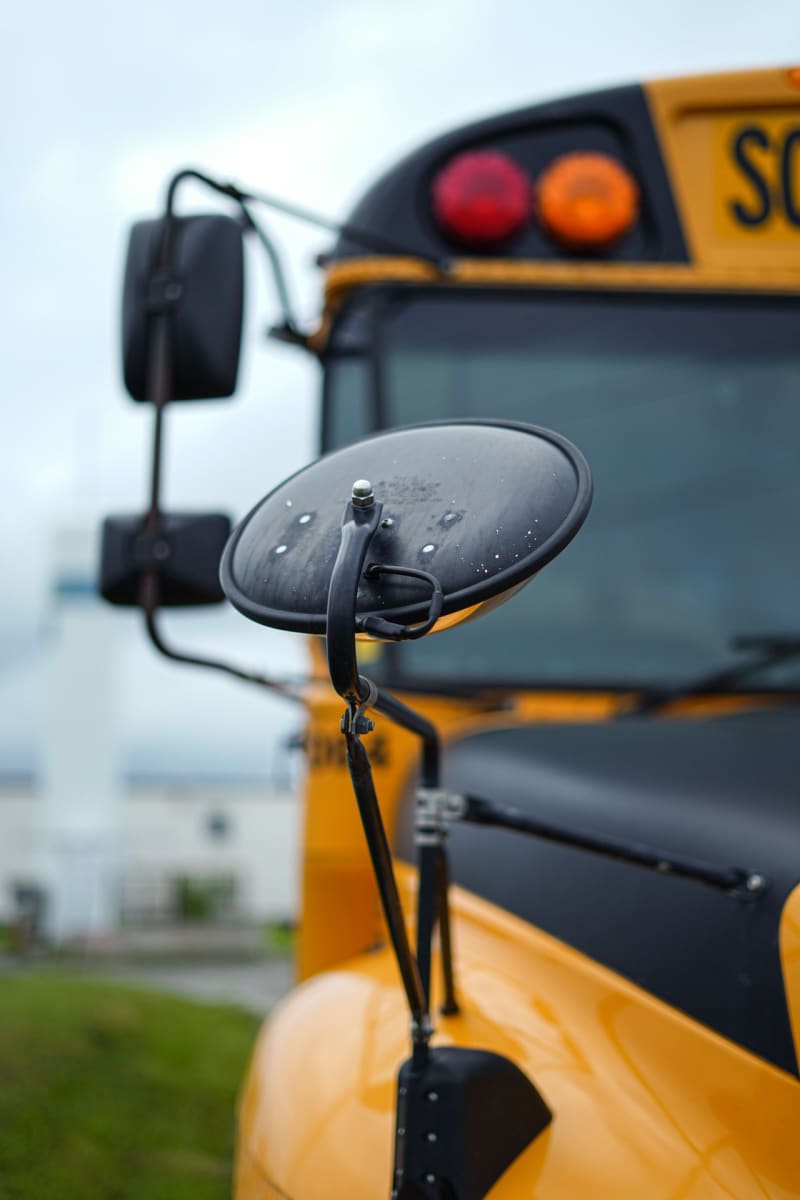
Every morning, thousands of parents in Nairobi, Mombasa, Kisumu and beyond hand their children over to a school bus driver and trust that they will arrive safely. That trust is enormous. And for school transport operators, the weight of that responsibility grows heavier every year. Parents are more vocal. Schools are more demanding. And the National Transport and Safety Authority (NTSA) continues to tighten compliance requirements for public service vehicles, including those transporting learners.
The pressure is real. A single accident involving a school bus can destroy a transport operator's reputation overnight. A viral video of reckless driving, one complaint from a parent about overcrowding, or an NTSA inspection that reveals a non-compliant vehicle can result in suspension, fines or worse. Operators who are serious about school transport can no longer rely on gut feeling and verbal assurances from drivers. They need evidence. They need visibility. They need technology that works even when no one is watching.
What Parents and Schools Cannot See Without a Dashcam
The uncomfortable truth about school bus transport in Kenya is that most of what happens on those routes is invisible to the people who matter most. A parent drops their child at the gate and assumes the journey will be safe. A school administrator reviews a paper attendance register at the end of the day. But between departure and arrival, an entire world of risk can unfold with zero documentation. Speeding on Thika Superhighway during the morning rush. A driver texting at a junction in Westlands. Students standing in the aisle because the bus is carrying fifteen children more than its licensed capacity.
None of these situations are hypothetical. They happen daily across Kenyan towns and cities. And without a camera system capturing what is actually occurring inside and around the bus, operators have no way to verify driver conduct, no way to confirm that safety procedures are being followed, and no way to respond when a parent raises a complaint. The visibility gap is not a minor inconvenience. It is a serious operational and legal vulnerability that puts children, drivers and the business itself at risk.
What makes this gap even more dangerous is the compounding effect of blind spots. A standard school bus has multiple angles that a driver physically cannot monitor while keeping eyes on the road. The rear of the vehicle. The left and right flanks at bus stages and school gates. The cabin behind the driver's seat. Without camera coverage across all these zones, incidents can occur and go unrecorded. When something goes wrong and a claim is made, operators are left defending themselves with nothing but a driver's word against a third party's accusation. That is not a position any responsible operator should accept.
How a 4-Channel Dashcam Changes School Bus Safety
A 4-channel AI dashcam system is not just a recording device. It is a full situational awareness platform designed to give school bus operators complete visibility across every angle of their vehicle, in real time and on replay. Here is what each channel delivers:
- Front camera: Captures the road ahead continuously, recording speed, road conditions and any collision or near-miss event with full timestamp and GPS data. This is your primary evidence channel in any accident dispute.
- Cabin camera: Monitors student behaviour inside the bus, including overcrowding, students standing in the aisle, fights or disturbances, and any interaction between the driver and passengers that could become a liability issue.
- Rear camera: Records vehicles approaching from behind, documenting tailgating, rear-end collision events and road behaviour that the driver cannot safely monitor while focused on the route ahead.
- Blind spot cameras: Reduce side collision risk at school gates, bus stages and narrow roads by giving the driver and management visibility of the vehicle's flanks where pedestrians and motorcycles are most likely to appear unexpectedly.
- Driver Monitoring System (DMS): Uses AI to detect driver distraction in real time, including phone use, looking away from the road and signs of fatigue such as eye closure or head drooping. Alerts are sent to fleet managers instantly.
- Advanced Driver Assistance System (ADAS): Warns the driver audibly and visually when the system detects a forward collision risk, unsafe following distance or lane departure. In dense Nairobi traffic, this feature alone can prevent serious accidents.
When all six of these capabilities work together, accountability shifts permanently. Drivers know they are being monitored. Not in a punitive way, but in a way that supports good habits and creates a professional standard. Operators who have deployed 4-channel AI dashcams on their school fleets report an immediate improvement in driver behaviour within the first two weeks of installation. Speeding incidents drop. Phone use behind the wheel becomes rare. Drivers become more conscious of how they handle the bus around pedestrians and cyclists near school gates.
For management, the transformation is equally significant. Instead of relying on parent complaints or hearsay to understand what is happening on their routes, operators can access footage remotely, review DMS alerts, and pull GPS-correlated video clips on demand. When a school calls to raise a concern about a driver, the operator can respond with facts, not assumptions. This level of accountability builds trust with schools, reassures parents and demonstrates to NTSA that the operator takes compliance seriously.
A Real Scenario: Dashcam Footage That Protected a School and Its Driver
Consider a scenario that plays out more often than most operators would like to admit. A school bus carrying twenty-three students is travelling along Ngong Road in Nairobi at 7:42 in the morning. The bus is moving within the speed limit, the driver is focused on the road and the children are seated. At a busy junction near the Prestige Plaza roundabout, a private saloon car runs a red light and clips the front-left corner of the bus while attempting to beat the traffic signal. The impact is minor. No children are injured. But the saloon car driver immediately steps out and begins insisting that the school bus driver was at fault, claiming the bus had moved into his lane without signalling.
Without a dashcam, this becomes a difficult dispute. The school bus driver's word against a private motorist. Possible police involvement. Legal fees. A lengthy insurance claim process. And in the background, whispers among parents that the school's bus was involved in an accident. Reputational damage that is hard to undo even when no one was actually at fault. In this scenario, the school transport operator fitted with a 4-channel AI dashcam has a very different experience. Within minutes of the incident, the operator can access the front camera footage remotely. The footage clearly shows the saloon car entering the intersection on a red light, the exact position of the school bus within its lane, and the moment of impact. The rear and side cameras confirm no unsafe manoeuvre was made by the bus driver.
The footage is shared with the insurance company and the police within the same day. The claim by the saloon car driver collapses immediately. The school is notified and given access to the relevant clip. Parents are reassured that their children were never at risk and that the driver acted responsibly throughout. The operator avoids a costly legal battle, maintains their contract with the school and builds a stronger case for renewing that partnership the following term. This is not an unlikely outcome. It is exactly what 4-channel dashcam technology is designed to deliver, every single day on every single route.
How Trackalways Africa Supports School Transport Operators in Kenya
At Trackalways Africa, we understand that school transport is not just another fleet category. The cargo is irreplaceable. We provide end-to-end support for school bus operators across Kenya, starting with a full assessment of your fleet, route profiles and specific risk areas. Our team handles the complete installation of 4-channel AI dashcam systems, ensuring optimal camera placement for maximum coverage across the front, cabin, rear and blind spot zones. We configure DMS and ADAS settings to match Kenyan road conditions and your specific operational requirements. Every device is integrated with our Venus Platform, giving you real-time alerts, cloud-stored footage and a central dashboard to monitor every bus in your fleet from a single screen.
We also provide training for your drivers and fleet supervisors, so the technology is used correctly from day one. Our support does not end at installation. We offer ongoing technical assistance, device health monitoring and system updates to ensure your dashcams continue performing at full capacity throughout the school year. Whether you operate two buses or twenty, our School Bus Management solution is built to scale with your business. If you are ready to protect your students, your drivers and your operation with technology that delivers real evidence when it matters most, contact our team today and we will get you started.
Frequently Asked Questions
Are dashcams required on school buses in Kenya?
NTSA regulations continue to evolve, and requirements for PSV vehicles including school buses are becoming more stringent. While dashcams are not yet universally mandated across all categories, many schools and county governments are now making them a contractual requirement for transport partners. Beyond compliance, dashcams are one of the most effective risk management tools available to school transport operators. Installing them now positions you ahead of regulatory changes and demonstrates proactive safety leadership to your clients.
Can parents see live video from a school bus dashcam?
This depends on the configuration your operator chooses. Trackalways Africa can set up systems where authorised stakeholders, such as school management, can access live or recorded footage through the Venus Platform. Direct parent access to live video streams requires careful policy decisions around privacy, particularly for cabin cameras that record all students on board. Most operators share relevant clips with parents only when a specific incident requires it, balancing transparency with data protection responsibilities.
How does an AI dashcam detect a tired driver on a school bus?
The Driver Monitoring System (DMS) uses an infrared cabin-facing camera to track the driver's facial features in real time. The AI analyses eye openness, blink frequency, head position and gaze direction. When the system detects prolonged eye closure, repeated yawning or the driver's head tilting downward, it triggers an immediate audible alert inside the bus to wake the driver. Simultaneously, a notification is sent to the fleet manager via the monitoring platform. This early warning system is critical for long school run routes, particularly early morning pickups where driver fatigue is a genuine risk.
What happens when a school bus dashcam detects a forward collision risk?
The ADAS component of the dashcam continuously analyses the distance between the school bus and the vehicle ahead, as well as relative speed. When the system calculates that a collision is imminent based on current speed and gap, it triggers an audible warning directly to the driver through the device's speaker. This gives the driver critical seconds to brake or manoeuvre. The event is also logged automatically with a timestamped video clip that can be reviewed by management. In Nairobi traffic where sudden braking and unpredictable lane changes are common, this feature significantly reduces rear-end collision risk.
How do I get dashcams installed on my school bus fleet in Nairobi?
Getting started is straightforward. Contact Trackalways Africa on +254 116 257285 or visit trackalwaysafrica.com/contact to schedule a consultation. Our team will assess your fleet size, route requirements and budget to recommend the right 4-channel dashcam configuration. We handle everything from supply and installation to platform setup and driver training. You can also explore our full range of dashcam products online before reaching out.