
The Accident Report That Came Down to "He Said, She Said"
A logistics company operating delivery vans across Nairobi received a claim from a matatu driver alleging one of its vans had caused a collision at a junction near Westlands. The company's van had no dashcam. The driver insisted he was not at fault, the matatu driver insisted otherwise, and with no footage on either side, the claim dragged through weeks of back-and-forth between insurers, eventually settling in a way that cost the company both money and time it could not get back. Two months later, a similar incident happened on a different van, this one fitted with a basic recording-only dashcam. The footage confirmed the company's driver was not at fault, and the claim was resolved within days. The difference between the two outcomes was not the accident itself, it was whether there was evidence. But even a plain recording dashcam only tells you what happened after the fact. It does nothing to prevent the driver behavior, fatigue, distraction, tailgating, that causes many of these incidents in the first place.
Where Driver Risk Goes Unmonitored Until It Becomes a Claim
Several categories of Kenyan and East African fleet operations carry driver-behavior risk that goes unmanaged without active, real-time monitoring.
- Long-haul routes with extended driving hours. Drivers on Nairobi to Mombasa or cross-border routes face fatigue risk that builds gradually and is invisible to a fleet manager unless something actively detects it.
- High-value cargo and courier fleets. Distraction from phone use during delivery runs increases both accident risk and the chance of missed turns or delayed drop-offs.
- Cold chain and perishable transport. A collision or hard-braking event on a refrigerated route risks both vehicle damage and spoiled cargo, compounding the financial loss.
- Passenger and staff transport operators. Fleets moving people rather than goods carry heightened liability exposure when a preventable incident, rather than an unavoidable one, causes injury.
- Night and early-morning delivery routes. Fatigue and reduced visibility both increase around these hours, and neither is something a basic recording camera can flag in real time.
Why a Recording-Only Dashcam Cannot Prevent the Incident It Documents
The mechanism here is a matter of what the device actually does with the footage it captures. A standard dashcam is a passive recorder. It captures continuous video to a memory card and does nothing else, no analysis, no alert, no intervention, while the vehicle is in motion. That means a driver who has been on the road for nine hours and is visibly fighting to stay awake, a driver glancing down at a phone at a critical moment, or a vehicle closing in dangerously fast on the car ahead, generates no warning to the driver and no alert to the fleet manager until after something has already gone wrong. The footage becomes useful only in hindsight, for settling a dispute or building a case after the fact. It has zero ability to interrupt the chain of events leading up to an incident, because interrupting requires real-time detection and an in-cab alert, functions a passive recording camera was never built to perform.
The MC202N: A Dashcam That Watches the Driver, Not Just the Road
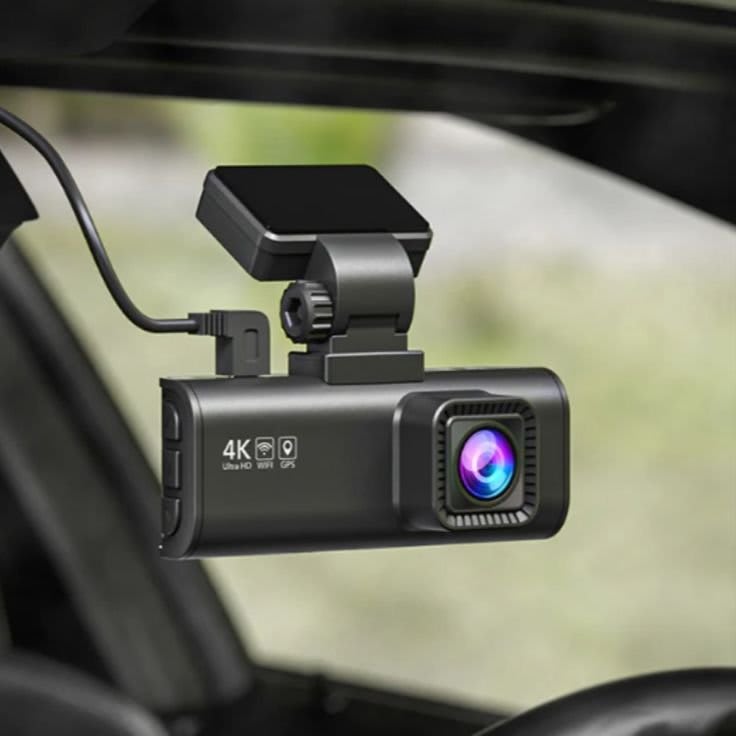
The MC202N from MettaX is a dual-channel AI dashcam built specifically to detect risky driver behavior as it happens, not just record it after the fact, making it the platform Trackalways Africa recommends for fleets serious about reducing preventable incidents.
1. Advanced AI Safety Detection
Built-in algorithms detect driver fatigue, smoking, phone use, and potential forward collisions in real time, triggering instant alerts to fleet managers the moment risky behavior is detected, not after an incident has already occurred.
2. Channel 1080P Recording
The MC202N records both the front road view and the cabin simultaneously in 1080P, giving fleet managers visibility into both what happened on the road and what the driver was doing at the moment it happened.
3. Expandable Storage and I/O
Supporting up to 512GB via TF card and featuring an RS232 interface, the MC202N can integrate with fuel sensors, RFID readers, and SOS buttons, extending its role beyond video into a broader in-cab monitoring point.
4. Power Disconnection Alert
The device seamlessly records and sends alerts upon power disruption, ensuring data safety and immediate notification of any tampering or sabotage attempt, such as a driver deliberately disconnecting the unit.
5. DMS and ADAS Functionality
Combining Driver Monitoring System (DMS) behavior detection with Advanced Driver Assistance System (ADAS) collision warnings gives fleet managers two layers of real-time risk detection from a single device.
What This Looks Like on an Actual Route
Picture a courier company running delivery vans across Nairobi during peak traffic hours. With MC202N units installed, a driver who has been behind the wheel since early morning begins showing signs of fatigue, eyes closing briefly at a red light, and the device's DMS detection triggers an in-cab alert immediately, prompting the driver to pull over rather than continuing into denser traffic drowsy. On a separate van, the ADAS forward collision detection flags a near-miss where the driver closed in too fast on stopped traffic ahead, and that event is logged and sent to the fleet manager's dashboard the same day, allowing a coaching conversation to happen before it becomes an actual accident rather than after. When one van is involved in a minor collision at a junction, the dual-channel footage, showing both the road ahead and the driver's actions in the seconds before impact, resolves the liability question with the insurer in under a week instead of dragging into a prolonged dispute.
Frequently Asked Questions
1. Does the MC202N record continuously, or only when it detects an event?
It records continuously to the TF card, with up to 512GB of expandable storage, while simultaneously running real-time AI detection for fatigue, phone use, smoking, and forward collision risk that triggers instant alerts alongside the ongoing recording.
2. Can the MC202N be used with fuel sensors or an SOS button on the same device?
Yes, it includes an RS232 interface that supports integration with fuel sensors, RFID readers, and SOS buttons, allowing it to serve as a broader in-cab monitoring point beyond video alone.
3. What happens if a driver tries to disconnect or disable the camera?
The MC202N includes a power disconnection alert that seamlessly records and sends notification of any power disruption, flagging potential tampering or sabotage attempts to the fleet manager in real time.
4. Does the MC202N monitor the driver's cabin as well as the road ahead?
Yes, it is a dual-channel (2 CH) dashcam recording both front road view and cabin footage simultaneously in 1080P, which is what enables its DMS driver behavior detection to function.
5. How do I get MC202N dashcams fitted to my fleet in Kenya?
Trackalways Africa supplies and installs the MC202N across Kenya, Uganda, and Tanzania, integrated with the Venus dashboard for real-time alerts. Call +254 116 257285 or visit trackalwaysafrica.com to protect your fleet.
Prevent the Incident, Not Just Document It
Footage after an accident settles disputes. Real-time driver monitoring prevents the accident from happening in the first place. The MC202N does both from a single device. Call Trackalways Africa on +254 116 257285 or visit trackalwaysafrica.com to fit your fleet with AI-powered driver safety monitoring.