
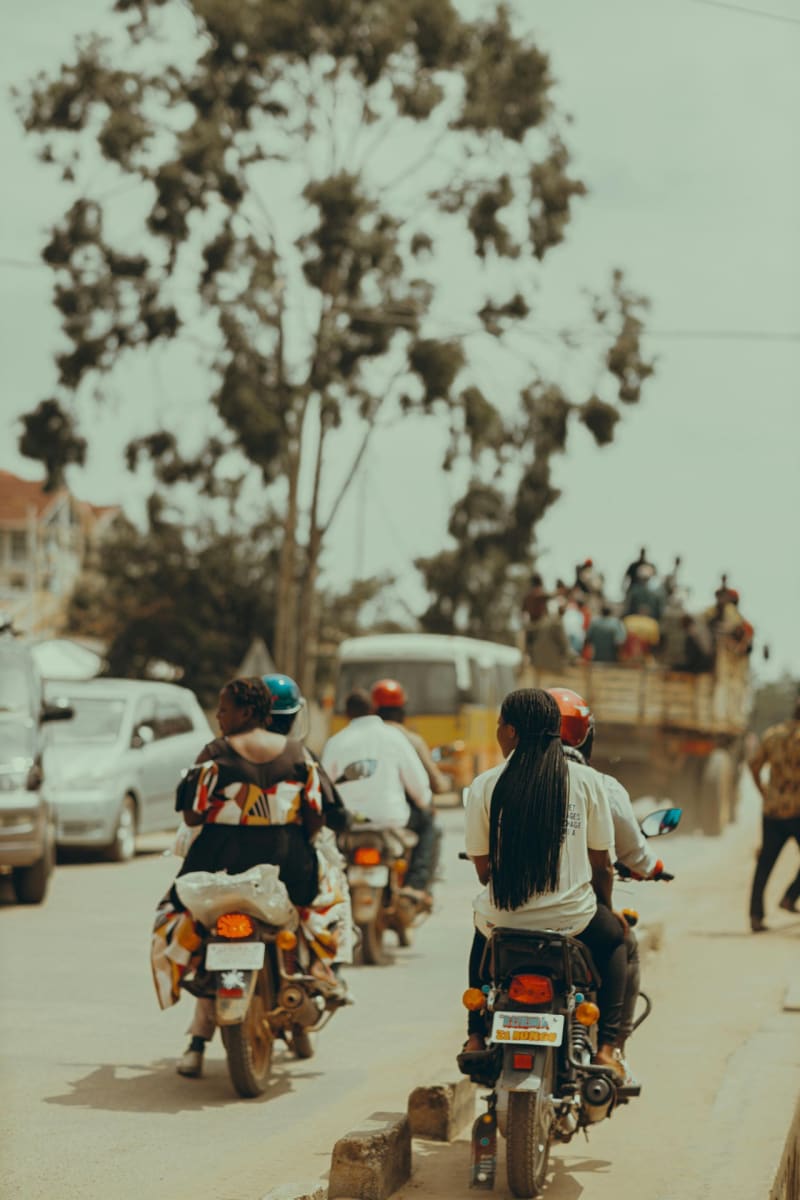
The boda boda economy is the backbone of last-mile transport across Kenya and Uganda. Millions of riders hustle every single day, ferrying passengers through Nairobi traffic, navigating Kisumu's lakeside streets, and weaving through Kampala's infamous gridlock. For saccos managing these fleets, the business looks profitable on paper. The reality on the ground is far messier. Motorcycles go missing overnight. Drivers operate outside agreed zones. Revenue leaks quietly through unauthorized trips, and no one can prove a thing without hard data.
Sacco managers are fighting a daily war on multiple fronts. They deal with drivers who deny taking extra trips. They deal with bikes that vanish and are never recovered. They deal with insurance headaches, police reports that go nowhere, and the slow bleed of operational losses that nobody seems able to stop. GPS tracking is changing that equation completely. Saccos across East Africa are now installing trackers on every motorcycle in their fleet and the results are impossible to ignore.
The Real Cost of Running an Untracked Motorcycle Fleet in Kenya
James Mwangi manages a 24-motorcycle sacco operating out of Kawangware in Nairobi. Two years ago, he was running the fleet on trust, phone calls, and gut instinct. Every morning he handed over bikes. Every evening he collected daily remittances. But the numbers never added up. Three motorcycles had gone missing in eighteen months. Two were recovered weeks later, stripped for parts. One was never found. The total loss hit close to KES 450,000. That kind of hit does not just sting. It threatens the entire operation.
James knew riders were doing unauthorized trips, taking private long-distance jobs to Thika or Machakos without reporting the income. He suspected some were subletting bikes to other riders at night without his knowledge. But he had no proof. Confronting drivers without evidence only created conflict and turnover. He was spending more time managing drama than managing his business. The sacco was hemorrhaging money and morale was low on both sides.
When a fellow sacco operator told him about GPS tracking, James was skeptical at first. He thought it was expensive technology built for lorries and corporate fleets, not boda bodas. He was wrong. After installing trackers on all 24 motorcycles, James had visibility into his entire fleet within 48 hours of going live. Within the first week, he had already caught two drivers operating outside permitted zones and one bike that had been used through the night without his authorization. The revenue leaks stopped almost immediately. The culture inside his sacco changed fast.
What GPS Tracking Actually Does for a Boda Boda Sacco
Modern GPS trackers designed for motorcycle fleets do far more than just show a dot on a map. They give sacco managers a live intelligence layer over their entire operation, accessible from any smartphone, at any time of day or night. Here is what the technology actually delivers:
- Live location visible from any smartphone: See every motorcycle on a real-time map without calling a single driver.
- Instant alert when a motorcycle moves without the ignition being turned on: This is your earliest warning for towing attempts or physical theft.
- Vibration alarm for unauthorized movement at night: If a parked bike is tampered with, you know within seconds.
- Route history showing unauthorized journeys: Every trip is logged with timestamps, start points, and destinations. No driver can deny a journey that the data has already recorded.
- Driver behavior monitoring for harsh riding: Sudden acceleration, hard braking, and overspeeding are flagged automatically, protecting both the rider and the asset.
These features shift the power dynamic inside a sacco fundamentally. Managers no longer have to rely on driver honesty or eyewitness accounts. The system generates objective records that are time-stamped and GPS-verified. When a driver knows that every route is logged and every unauthorized movement triggers an alert, behavior changes fast. Accountability becomes structural, not personal. Disputes get resolved with data instead of arguments.
The ripple effects go beyond discipline. Sacco managers report lower insurance premiums after demonstrating that their fleets are tracked. Recovery rates for stolen motorcycles improve dramatically when police are given real-time coordinates instead of a vague description. Drivers who ride responsibly appreciate that the system also protects them from false accusations. The entire ecosystem becomes healthier when everyone is operating with the same verified information. Learn more about how our fleet management solutions deliver this kind of visibility at scale.
Real Scenarios Where GPS Tracking Made a Difference
At 11:47 PM on a Tuesday night, a sacco manager in Githurai received a vibration alert on his phone. One of his motorcycles, parked outside a rider's home in Kasarani, had been moved. No ignition. No authorization. He opened the tracking app and watched the bike moving north on Thika Road. He called the police, shared the live coordinates, and within two hours the motorcycle was intercepted near Ruiru. Two suspects were arrested. Without the tracker, that bike would have been another statistic.
A Kisumu-based sacco was losing revenue it could not account for. After installing GPS on its fleet, the manager pulled route histories for the previous month and discovered one driver had been making regular runs to Ahero, a 30-kilometer journey outside the permitted zone, at least three times a week. The driver had been pocketing the full fare without remitting anything. When confronted with the printed route logs, there was nothing to dispute. The driver was disciplined, new zone agreements were signed by all riders, and the sacco recovered its standing policy with teeth behind it.
Peter Otieno manages 20 boda bodas from an office in Nairobi's CBD. None of his motorcycles operate in the CBD. They run routes across Eastlands, Umoja, and Donholm. Before GPS tracking, managing that spread meant constant phone calls, missed check-ins, and guesswork. Today, Peter opens one app on his lunch break and sees all 20 bikes on a live map. He checks route histories every Friday before remittance day. He gets alerts for overspeeding. His drivers know he can see everything. The operation runs tighter than it ever has, and Peter has not visited a single stage in three months.
How Trackalways Africa Works With Saccos Across Kenya
At Trackalways Africa, we understand that a boda boda sacco operates differently from a corporate logistics fleet. Our team works directly with sacco managers in Nairobi, Kisumu, Mombasa, Kampala, and growing towns across East Africa to design tracking setups that fit real operational needs. We install discreetly, train your team on the platform, and make sure you are seeing value within the first week. Our Venus Platform is built to handle fleets of all sizes, from five motorcycles to five hundred, with an interface that does not require any technical background to use confidently.
We also provide ongoing support because we know the ground shifts fast in this industry. Drivers change. Routes change. Business models evolve. Our team stays engaged with the saccos we work with, helping managers understand their data and act on it. If you are ready to bring real accountability to your motorcycle fleet, reach out to us through our contact page and we will walk you through exactly what the right setup looks like for your sacco. No jargon. No overselling. Just honest answers and a solution that works.
Frequently Asked Questions
How do boda boda saccos use GPS trackers in Kenya?
Saccos install compact GPS trackers on each motorcycle in the fleet. The devices transmit real-time location data, route history, and movement alerts to a central platform accessible via smartphone or desktop. Sacco managers use this data to monitor driver behavior, enforce zone agreements, and respond immediately to theft or unauthorized use.
Can I track my motorcycle if it is stolen at night in Nairobi?
Yes. GPS trackers with vibration detection and movement alerts will notify you the moment the bike is tampered with, even if the ignition is off. You can share live coordinates with police immediately, significantly improving the chances of recovery. Many recoveries happen within hours when real-time tracking is in place.
Do GPS trackers work on boda bodas in rural Kenya with poor network?
Most modern trackers operate on multiple network bands, switching between available signals automatically. In areas with weak connectivity, the device stores location data locally and syncs it once a stronger signal is found. Coverage continues to improve across Kenya as mobile network infrastructure expands.
How much does it cost to track a boda boda fleet in Kenya?
Costs vary depending on fleet size, the type of tracker installed, and the platform subscription model. Trackalways Africa offers flexible packages designed for saccos at different scales. Contact us directly at +254 116 257285 for a quote tailored to your fleet size and operational needs.
Can I see my driver's route history on my phone?
Absolutely. The Venus Platform stores full route histories for every motorcycle in your fleet. You can filter by date, time, or individual bike. Every journey is logged with start and end points, distance covered, and timestamps. This data is accessible from any smartphone with an internet connection.